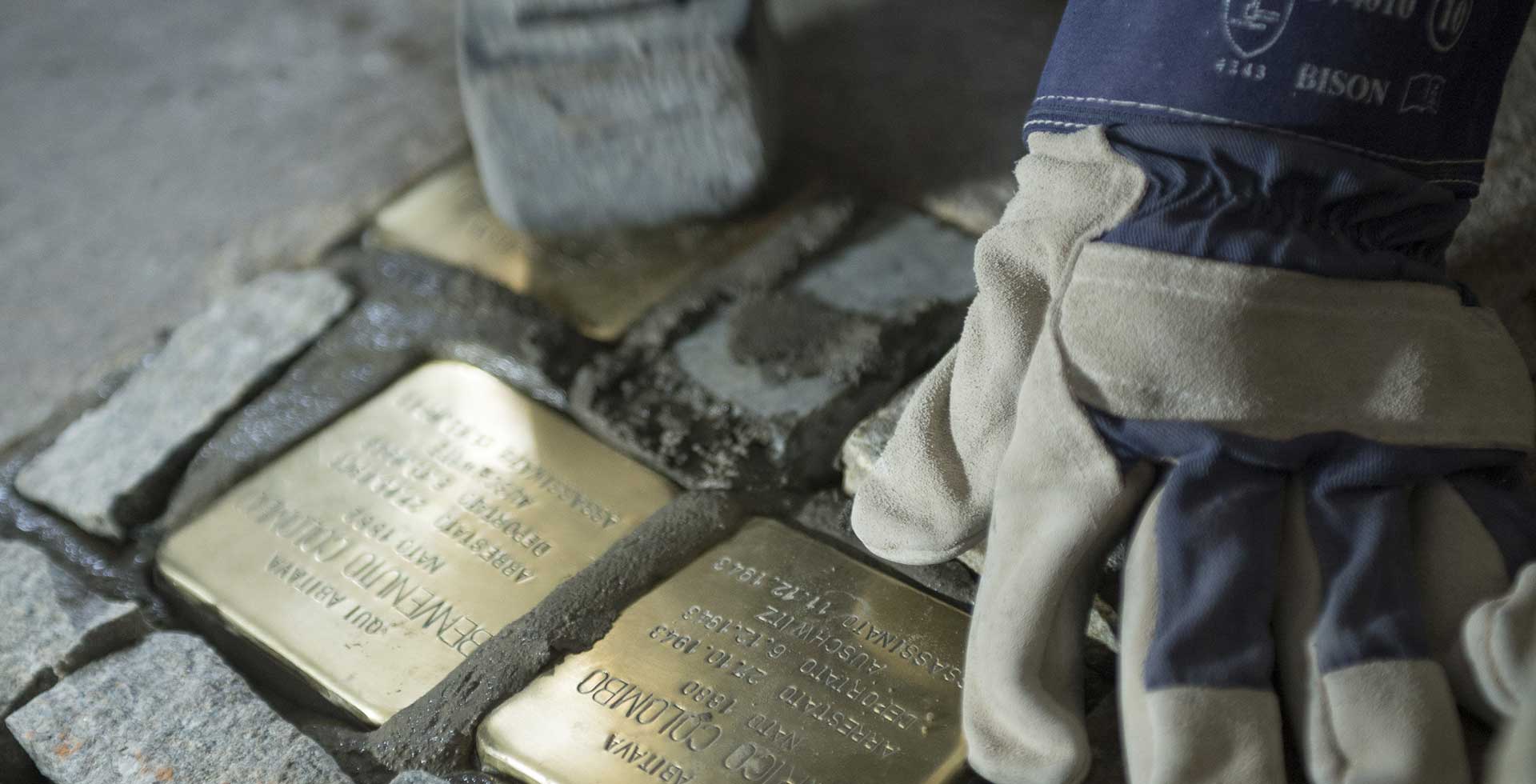
Stolpersteine on your street
More than 100,000 brass stones lie in pavements across Europe. Each one is set in front of a house and bears the name of a person who lived there and was driven out, deported or murdered by the Nazis. Look them up on the map by name, street or city.
Info
The German artist Gunter Demnig (1947, Berlin) puts memorials on the sidewalk in front of the houses of people who have been driven, deported, murdered or committed to suicide by the Nazis. These Stolpersteine remind of Jews, Sinti and Roma, political prisoners, homosexuals, Jehovah’s witnesses and euthanasia victims, among others. The stones are not only placed in the Netherlands and Belgium but also in Germany, Denmark, France, Hungary, Italy, Luxembourg, Norway, Ukraine, Austria, Poland, Czech Republic, Slovenia and Israel.
New: version 3 of the app
Version 3 of the Stolpersteine app is out, for iPhone and Android. You can now choose a walking route and be guided from stone to stone: the map shows the route, your own position and the distance to the next stop. A walk can be started from every stone.
The whole app can now be used in 44 languages. Search by name, address or town and go straight to the stone on the map, which has the same style as the website. Addresses you have looked at before stay available without internet, and every stone can be shared with a link.
The database now holds more than 108,000 Stolpersteine in more than 3,300 cities. Local organizations manage their own Stolpersteine in the CMS, and you can put the interactive map on your own website.
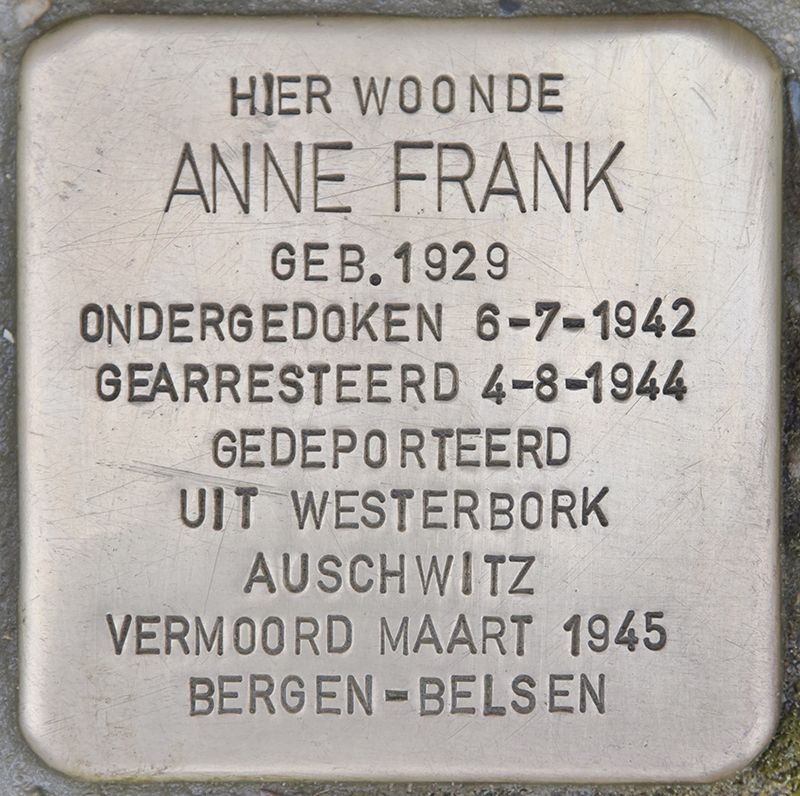
Stolperstein for Anne Frank in Amsterdam 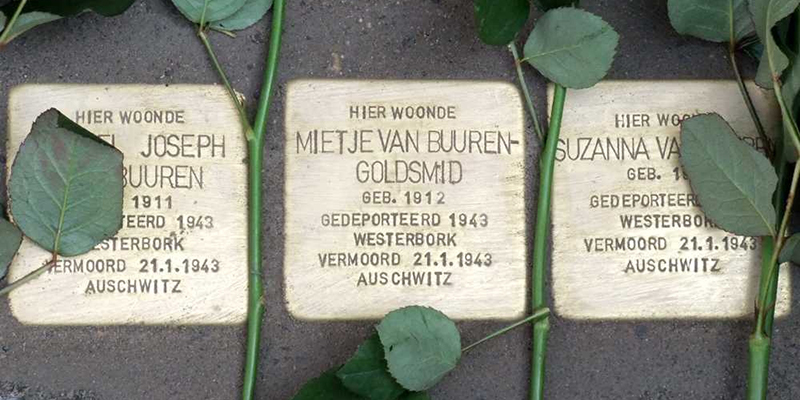
Three Stolpersteine for the Van Buuren family, with roses laid between them 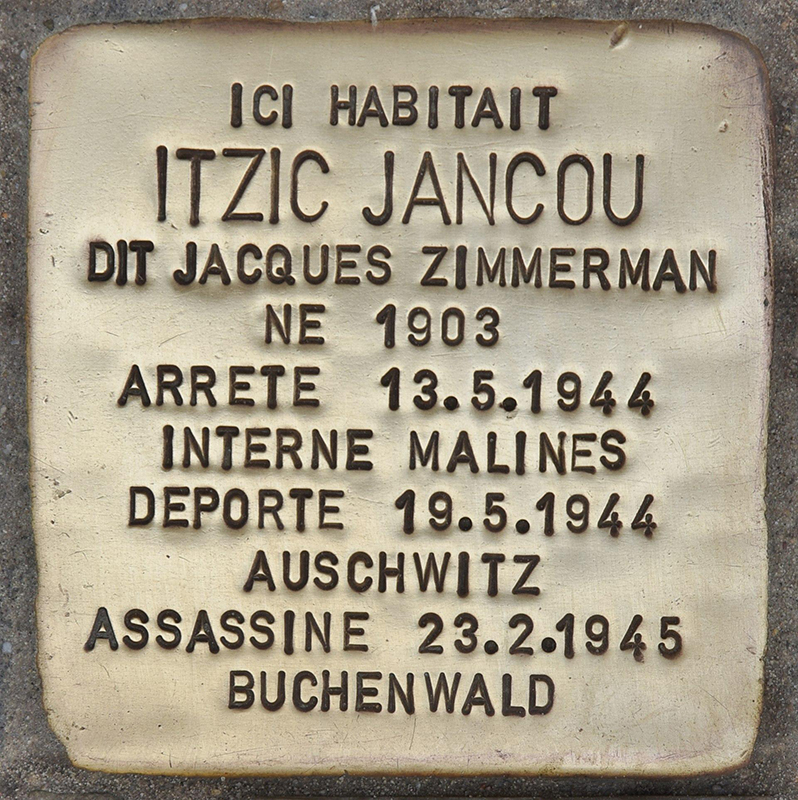
Stolperstein in French for Itzic Jancou 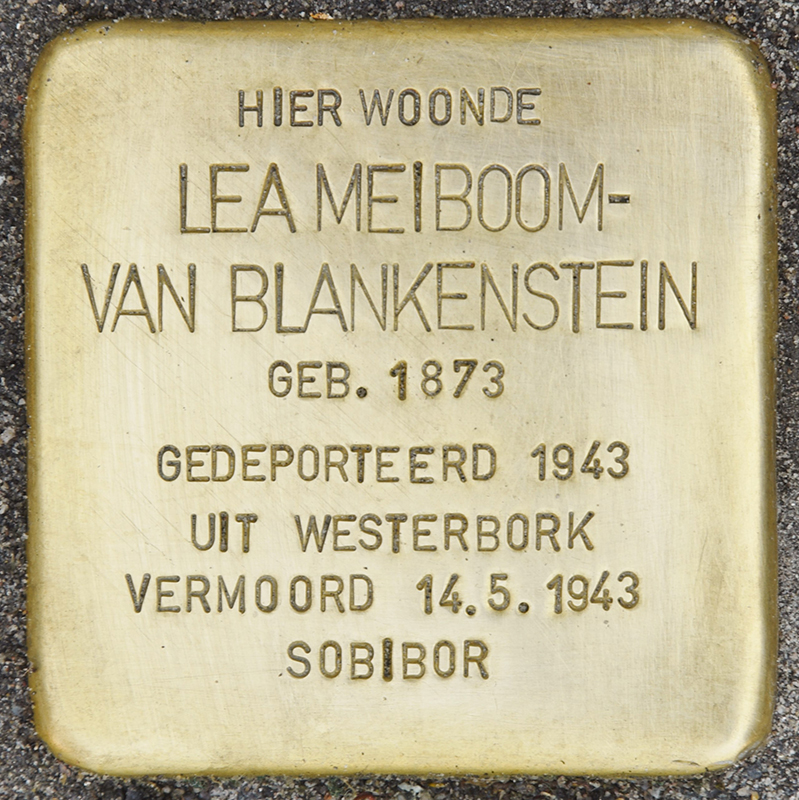
Stolperstein for Lea Meiboom-van Blankenstein in Hardinxveld-Giessendam